
Facebook Ads Scaling Strategy: When to Touch a Campaign
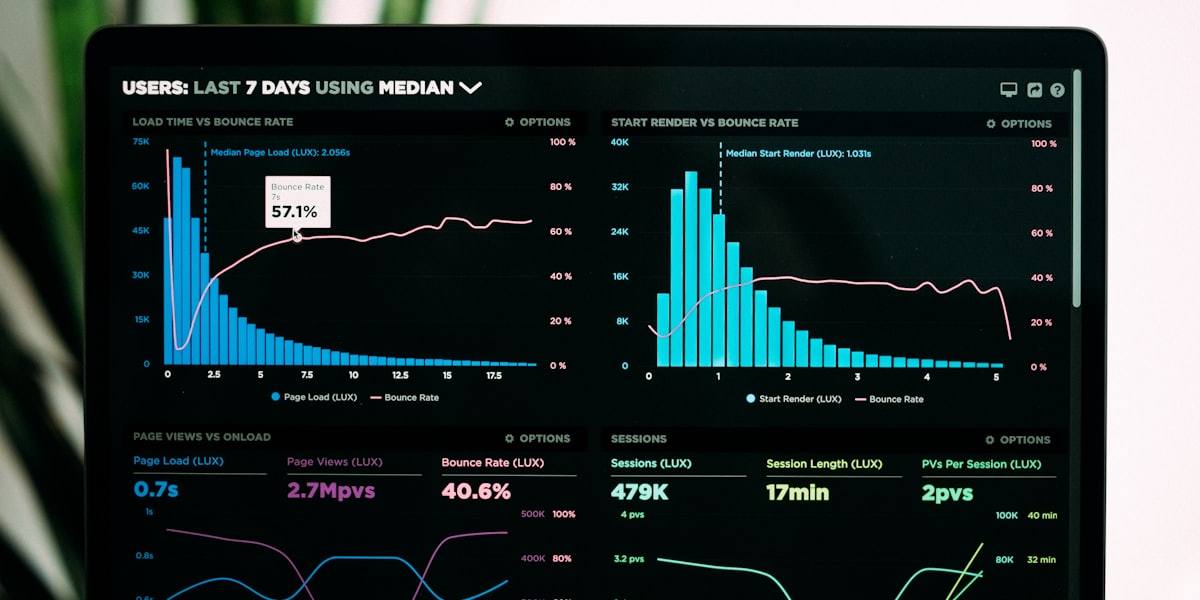
The most expensive habit in paid social is not bad creative or a weak offer. It is the twitchy hand on the dashboard. An ad set has a slow morning, someone panics, edits the budget, swaps an audience, and quietly resets days of algorithmic learning. The account never stabilizes, and everyone blames Meta.
A real facebook ads scaling strategy is mostly a discipline problem, not a tactics problem. The buyers who scale accounts consistently are not the ones with secret hacks. They are the ones who decided, in advance, exactly when they are allowed to touch a campaign and when they are required to leave it alone. This post lays out that decision system: how learning phases actually work, the criteria that justify an intervention, kill rules, and the difference between vertical and horizontal scaling.
The Learning Phase Is a Contract You Keep Breaking
Every time you launch a new ad set or make a meaningful change to an existing one, Meta’s delivery system enters a learning phase. During this period the system is still figuring out who responds to your ads, and Meta’s own documentation is explicit that performance is less stable while learning is underway. An ad set generally needs around 50 optimization events within a seven-day window to exit learning and reach stable delivery.
Here is the part most advertisers underestimate. Meta maintains a list of significant edits that restart that learning process: changes to targeting, changes to ad creative, changes to the optimization event, adding a new ad to the ad set, pausing for seven days or more, and substantial changes to budget or bid strategy.
Read that list again and think about a normal week in a nervous advertiser’s account. Budget nudged on Monday. New creative added on Wednesday. Audience “refined” on Friday. That account is not underperforming because the algorithm is broken. It is underperforming because it has been in a permanent state of learning, and every edit threw away the calibration the system had built.
The contract is simple: give the system enough conversions and enough uninterrupted time, and it stabilizes. Most accounts break the contract weekly and then complain about the results.
A Facebook Ads Scaling Strategy Starts With Intervention Rules
The core of a disciplined facebook ads scaling strategy is a written set of intervention criteria. Not vibes. Not “this feels off.” Written rules that define when a human is allowed to make a change.
Here is the framework we use when monitoring ad accounts:
- Volume before verdict. Do not judge an ad set until it has spent at least one to two times your target cost per acquisition. Judging an ad set on $14 of spend is reading tea leaves.
- Windows, not moments. Evaluate performance over three to seven day windows. A single bad morning on a $100/day budget is noise. Conversion reporting also lags, so yesterday’s “disaster” often looks fine by Thursday.
- Trends, not blips. One bad day is noise. Two bad days are worth noting in your log. Three consecutive days of decline against your baseline is a signal that justifies action.
- One change at a time. If you change budget, creative, and audience together, you have learned nothing. When performance moves, you will not know which lever moved it.
Four questions to answer before any edit
Before anyone touches a live campaign, they should be able to answer yes to all four:
- Has this ad set exited the learning phase?
- Has it spent enough for the data to mean something?
- Is the problem a sustained trend rather than a single bad day?
- Is the improvement I expect from this edit worth resetting learning?
If any answer is no, the correct move is to write an observation in the log and close the laptop. That last behavior, documented waiting, is the single biggest difference between professional media buyers and stressed founders running their own ads.
Kill Rules: Decide What Dies Before You Launch
Intervention rules tell you when you may act. Kill rules tell you when you must. The key is that they are written before launch, when you are calm, not at 11 p.m. while staring at a red dashboard.
Useful kill rules look like this:
- Ad level: kill any ad that spends two times target CPA with zero conversions.
- Ad set level: kill any ad set that, after exiting learning, runs above breakeven CPA for seven consecutive days.
- Creative fatigue: pause a creative when frequency climbs past your threshold and click-through rate falls to half its baseline.
- Account level: if blended performance stays below breakeven for two full weeks, stop scaling and move to diagnosis mode.
Pre-committed rules remove emotion from both directions. They stop you from mercy-killing an ad set that needs two more days of data, and from babysitting a loser for a month because you love the creative.
One caution: kill rules apply to clear, sustained failure. A previously profitable ad set that suddenly dips deserves diagnosis, not execution. We wrote a full walkthrough of that diagnostic process in Why Your ROAS Dropped (And How to Fix It), and the short version is that most “dead” ad sets have a structural cause you can identify before deciding anything.
Vertical vs Horizontal Scaling: Two Different Muscles
Once something works, there are exactly two ways to scale it. Most accounts get hurt by doing the right one the wrong way.
Vertical scaling: raising budgets without resetting the machine
Vertical scaling is the budget half of your facebook ads scaling strategy: more spend into what already works. The danger is that large budget changes count as significant edits, so an aggressive jump can knock a stable ad set straight back into learning. The widely used practitioner guideline, summarized in Admetrics’ scaling guide, is to raise budgets by no more than about 20 percent every three to four days, and only after performance has been stable since the last increase.
Slow feels frustrating when something is printing. But a 20 percent compounding increase every three to four days roughly doubles a budget in two weeks without destabilizing delivery. The buyer who doubles the budget overnight usually spends the next week paying learning-phase prices for the same traffic.
Horizontal scaling: more surface area, same discipline
Horizontal scaling means expanding sideways: new campaigns, new creative angles, new placements, new markets. In 2026 this increasingly means creative expansion rather than audience expansion. Meta’s Andromeda update, which rolled out across most objectives by October 2025, shifted delivery away from advertiser-selected audiences and toward creative-based matching, where the system reads your ads to decide who should see them. The same analysis recommends keeping 15 to 20 active ads with genuinely different hooks and formats, because creative variety is now the main lever you have for reaching different pockets of buyers.
Practically, that means your horizontal scaling roadmap is a creative production roadmap. Each new concept is a new “audience” in the post-Andromeda world. Horizontal scaling also stresses everything downstream: fulfillment, cash flow, support, reporting. Past a certain spend level the bottleneck stops being the ad account entirely, which is exactly what we covered in Scaling Past $100k/mo: The Infrastructure Shift.
Why Panic Edits Destroy Accounts
It is worth spelling out the mechanics of the doom loop, because once you see it, you cannot unsee it in struggling accounts:
- Performance dips, often for ordinary reasons: reporting lag, a weak day of auction competition, a slow sales day across the board.
- The advertiser makes an edit to “fix” it.
- The edit resets learning. Delivery becomes less stable and usually more expensive, exactly as Meta’s documentation warns.
- The worse numbers confirm the advertiser’s fear that something is wrong.
- They edit again. Return to step 3.
Each loop discards calibration the system had paid real money to acquire. Run this loop for a month and you have an account where nothing has ever had the chance to work, a graveyard of three-day-old ad sets, and a deeply held belief that “Facebook ads don’t work for us.”
The cure is not more dashboard time. It is a process that separates observation from action. Automation is genuinely good at the observation half: flagging spend anomalies, broken pixels, disapproved ads, and CPA drift the moment they happen. We build those alert systems as part of our AI-augmented workflow automation work. But the decision to act has to stay human, because a machine cannot tell a reporting lag from a real problem, and it does not know your dip coincides with a competitor’s launch or a holiday weekend. That division of labor, machines watching and humans deciding, is the theme we keep returning to in Human Judgement vs AI.
What Disciplined Monitoring Actually Looks Like
A facebook ads scaling strategy only works if the monitoring routine underneath it is consistent. Here is the cadence we run for paid social accounts. It is boring by design.
Daily: 15 minutes, observation only
- Check spend pacing against plan.
- Check delivery: rejected ads, learning-limited flags, pixel or CAPI errors.
- Scan for true anomalies (spend with zero delivery, CPA at five times baseline).
- Write one or two lines in the monitoring log.
- Make zero edits unless a pre-written kill rule has been triggered.
Weekly: the only regular editing session
- Review three and seven day trends against baseline.
- Check frequency and CTR decay for creative fatigue.
- Apply kill rules that have triggered.
- Make at most one or two deliberate changes per campaign, each logged with the reason and the expected result.
- Queue next week’s creative tests.
The change log is non-negotiable
Every edit gets a line: date, what changed, why, and what you expect to happen. Six weeks later, this log is the difference between knowing what works in your account and guessing. It also makes handoffs possible, audits fast, and panic edits visible in hindsight.
If this sounds like more system than you have time to run, that is a fair signal. Monitoring discipline is what separates real account management from posting and hoping, and it is the backbone of our social media management service, where ads monitoring and scaling run on exactly this cadence.
Frequently Asked Questions
How long should I wait before judging a new ad set?
Wait until it has exited the learning phase and spent at least one to two times your target CPA, whichever takes longer. For most accounts that means three to seven days minimum. Judging earlier means judging noise, and acting on noise resets the clock and costs real money.
Does changing the budget always reset the learning phase?
No. Small adjustments are generally tolerated, while substantial budget changes count as significant edits under Meta’s documentation. The common practitioner guideline is to keep single increases around 20 percent and to space them a few days apart. Large overnight jumps are the most common self-inflicted learning reset.
Should I scale by raising budgets or duplicating campaigns?
Start vertical, in small increments on proven ad sets, because it is the simplest path and preserves accumulated learning. Go horizontal when vertical increases start degrading efficiency, and treat horizontal scaling primarily as creative expansion: new hooks, formats, and angles rather than new audience selections, which matter far less after Meta’s shift to creative-based delivery.
How do I know if a performance drop is creative fatigue or something structural?
Check the leading indicators first. Fatigue usually shows rising frequency and falling CTR while everything else holds. Structural problems (tracking breakage, attribution changes, landing page issues, competitive shifts) tend to hit conversion rate or reported ROAS without the same frequency pattern. Diagnose before editing, and only change one variable once you have a hypothesis.
Scaling ad spend is a patience game played against your own reflexes, and the accounts that win are the ones with written rules and a steady hand. If you would rather have a team that runs this monitoring discipline for you, with daily checks, change logs, and scaling decisions made on data instead of dread, that is exactly what our social media management service is built for. Reach out at contact@jadedynamicslimited.com and we will look at your account together.